A gentle beginning: prepare, make wudu, and learn the movements and words of Salah.بداية ميسرة: الاستعداد، والوضوء، وتعلم حركات الصلاة وأذكارها.
Listen & learnاستمع وتعلم
Loading device voices…جارٍ تحميل أصوات الجهاز…
English reading of the page using your device voice. Quran recitation is available through the Al-Fatihah and Al-Ikhlas links below.قراءة الصفحة بالإنجليزية بصوت الجهاز. تتوفر تلاوة القرآن عبر روابط الفاتحة والإخلاص أدناه.
A separate Arabic reading of a booklet on wudu, ghusl and prayer by Muhammad ibn Salih al-Uthaymeen. It does not follow this page word for word; some school-specific details may differ.قراءة عربية مستقلة لرسالة في الوضوء والغسل والصلاة للشيخ محمد بن صالح العثيمين. لا تتبع نص هذه الصفحة حرفيًا؛ وقد تختلف بعض التفاصيل الفقهية.
Recording: Central Library of Talking Booksالتسجيل: المكتبة المركزية للكتب الناطقة · IslamHouse.com
Before you beginقبل أن تبدأ
Time & directionالوقت والقبلة
Check that the prayer’s time has begun. Face the Qibla and intend the particular prayer in your heart; no spoken intention is needed.تأكد من دخول وقت الصلاة، واستقبل القبلة، وانوِ الصلاة المعينة بقلبك؛ ولا يلزم التلفظ بالنية.
Have valid wudu, remove ritual impurities from your body, clothes and prayer place, and wear suitable clothing covering the required ‘awrah. If ghusl is required, wudu alone is not enough. Ask a teacher about your circumstances.كن على وضوء صحيح، وأزل النجاسة عن بدنك وثوبك ومكان صلاتك، والبس لباسًا ساترًا للعورة المطلوبة. إذا وجب الغسل فلا يكفي الوضوء وحده. اسأل معلمًا عن أحكام حالتك.
Move with calmالطمأنينة والاستطاعة
Settle in each posture rather than rushing. Stand for obligatory prayer if able; if unable, pray sitting, or on your side if you cannot sit. A teacher can help you adapt movements to your ability.اطمئن في كل هيئة ولا تتعجل. قم في الفريضة إن استطعت؛ فإن لم تستطع فصل جالسًا، فإن لم تستطع فعلى جنب. يساعدك المعلم على أداء الحركات بحسب استطاعتك.
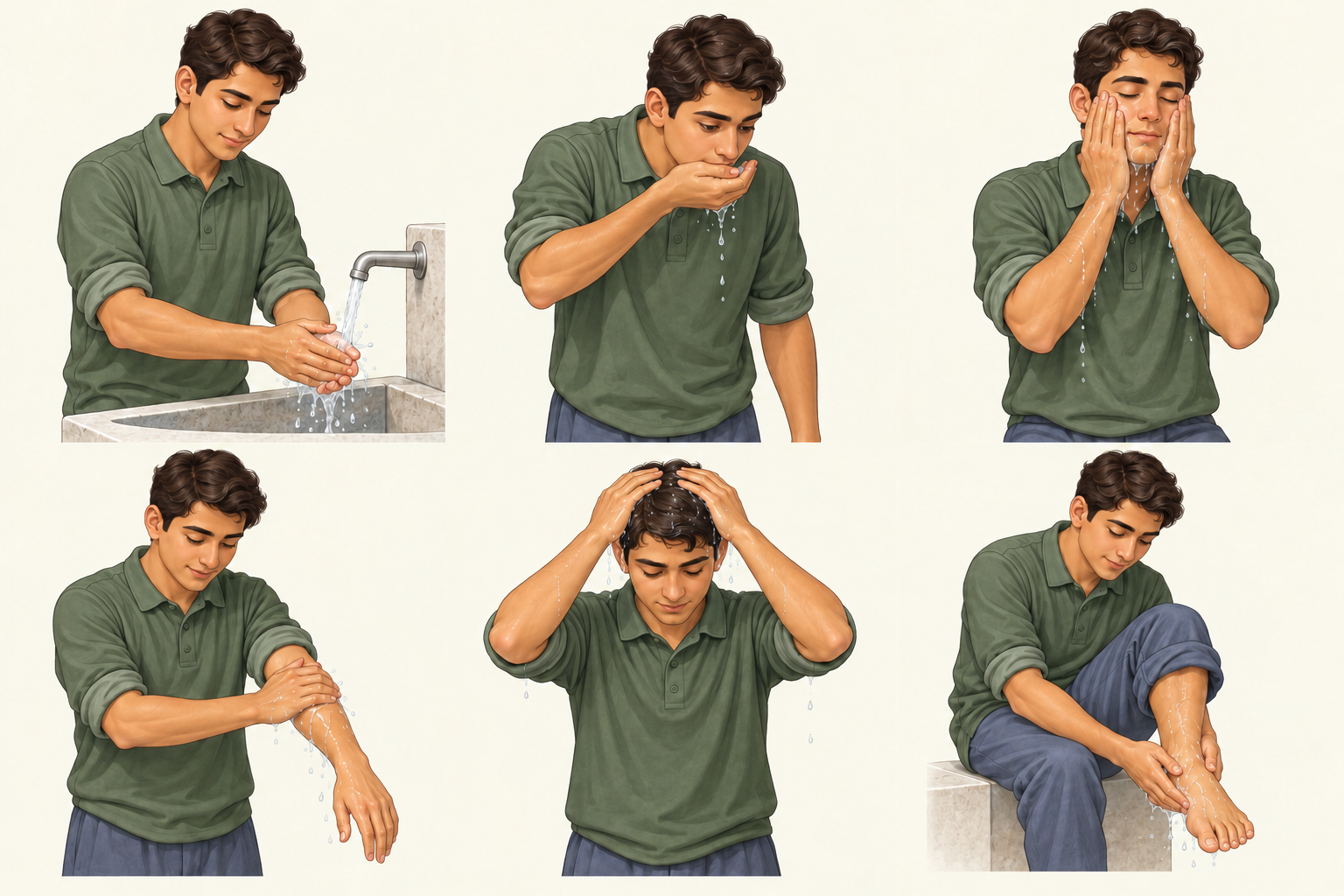
This shows a common complete method. Wash thoroughly without wasting water. For the required washed parts, one complete wash is sufficient; three washes are a Sunnah practice. The head is wiped, not washed. Schools differ on some requirements and details.هذه صفة شائعة للوضوء الكامل. اغسل جيدًا دون إسراف في الماء. تكفي غسلة كاملة للأعضاء التي يجب غسلها، والثلاث من السنة. والرأس يُمسح ولا يُغسل. وتختلف المذاهب في بعض الواجبات والتفاصيل.
1 / 6
Handsاليدان
Begin with the intention to purify yourself, and say Bismillah. Wash both hands, including between the fingers; three washes are a common Sunnah practice.ابدأ بنية الطهارة، وقل بسم الله. اغسل اليدين مع ما بين الأصابع؛ وغسلهما ثلاث مرات من السنن المعروفة.
2 / 6
Mouth & noseالفم والأنف
Rinse your mouth. Gently draw water into your nose and expel it. A common Sunnah practice is to repeat three times; be gentle, especially when fasting.تمضمض، واستنشق الماء برفق ثم استنثر. من السنن المعروفة تكرار ذلك ثلاث مرات؛ وكن رفيقًا، خاصة عند الصيام.
3 / 6
Faceالوجه
Wash the whole face from the hairline to the chin and from ear to ear. A common Sunnah practice is three washes.اغسل الوجه كاملًا من منابت الشعر إلى الذقن، ومن الأذن إلى الأذن. ومن السنن المعروفة غسله ثلاث مرات.
4 / 6
Arms, including elbowsالذراعان مع المرفقين
Wash from the fingertips up to and including each elbow, starting on the right. A common Sunnah practice is three washes for each arm.اغسل من أطراف الأصابع إلى المرفق مع غسل المرفق، وابدأ باليمين. ومن السنن المعروفة غسل كل ذراع ثلاث مرات.
5 / 6
Head & earsالرأس والأذنان
With wet hands, wipe the head once, moving from the front to the back and returning. Wipe the ears, using the index fingers inside and the thumbs behind them.امسح الرأس بيدين مبللتين مرة، من الأمام إلى الخلف ثم العودة. وامسح الأذنين بالسبابتين داخلهما والإبهامين خلفهما.
6 / 6
Feet, including anklesالقدمان مع الكعبين
Wash each foot, including the ankles and between the toes, starting on the right. A common Sunnah practice is three washes. Make sure water reaches the heels.اغسل كل قدم مع الكعبين وما بين الأصابع، وابدأ باليمين. ومن السنن المعروفة الغسل ثلاث مرات. تأكد من وصول الماء إلى العقبين.
If your wudu is still valid, you do not need to repeat it for every prayer. Toileting and passing wind invalidate it; ask a teacher about sleep and other cases. If water cannot be used, seek guidance on tayammum.إذا بقي وضوؤك صحيحًا فلا يلزم تجديده لكل صلاة. ينقضه قضاء الحاجة وخروج الريح؛ واسأل معلمًا عن النوم وغيره. إن تعذر استخدام الماء، فتعلم أحكام التيمم من أهل العلم.
A two-rak‘ah prayer, step by stepصلاة ركعتين خطوة بخطوة
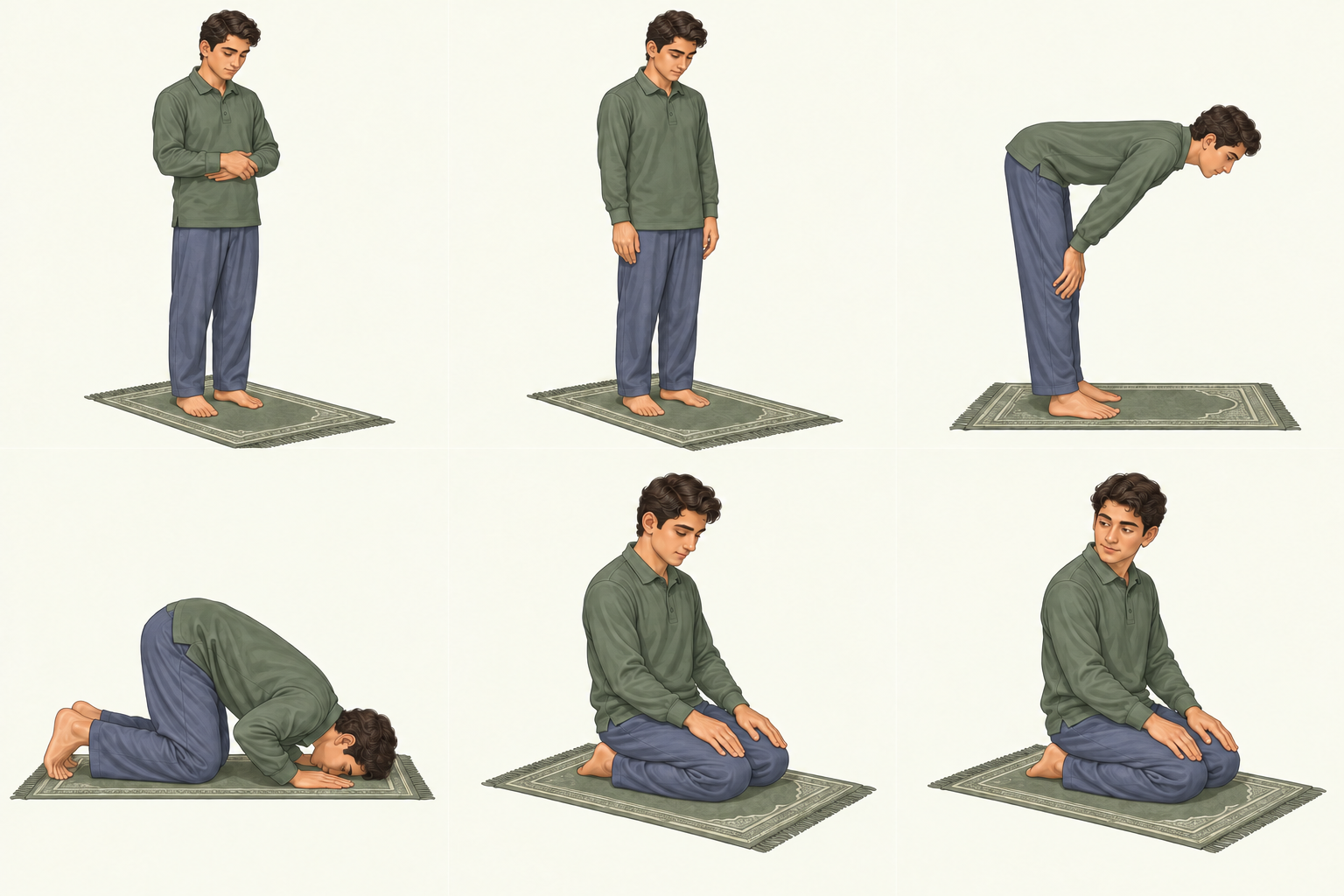
A rak‘ah is one unit of prayer: standing recitation, bowing, standing again, and two prostrations with a sitting between them. The drawings show the general movements, not every posture detail.الركعة وحدة من الصلاة: قيام وقراءة، وركوع، واعتدال، وسجدتان بينهما جلوس. توضح الرسوم الحركات العامة، ولا تبين كل تفاصيل الهيئات.
1 / 8
Begin standingالقيام وتكبيرة الإحرام
Face the Qibla, intend the prayer in your heart, and stand if able. Raise your hands and say Allahu akbar to begin. A common practice is to place the right hand over the left while standing; hand placement varies by school.استقبل القبلة، وانوِ الصلاة بقلبك، وقم إن استطعت. ارفع يديك وقل الله أكبر لبدء الصلاة. من الهيئات المعروفة وضع اليمنى على اليسرى في القيام؛ ويختلف موضع اليدين بين المذاهب.
Recite Al-Fatihah carefully. In the first two rak‘ahs, follow it with a short surah or verses you know. Say Amin after Al-Fatihah. Learn pronunciation from a reliable teacher or recitation; recitation behind an imam has school-specific rules.اقرأ الفاتحة بتأنٍ، ثم اقرأ في الركعتين الأوليين سورة قصيرة أو آيات تحفظها. قل آمين بعد الفاتحة. تعلم النطق من معلم موثوق أو تلاوة موثوقة؛ وللقراءة خلف الإمام أحكام تختلف باختلاف المذهب.
Say Allahu akbar and bow, with your hands on your knees and your back level as you are able. Settle in this position, and say Subhana rabbiyal-‘azim. Repeating this three times is a common practice.قل الله أكبر واركع، وضع يديك على ركبتيك، واجعل ظهرك مستويًا حسب استطاعتك. اطمئن في الركوع وقل سبحان ربي العظيم. ومن العمل المعروف تكرارها ثلاث مرات.
When praying alone, rise saying Sami‘allahu liman hamidah. Once fully upright, say Rabbana laka-l-hamd. Pause calmly before the next movement. A person following an imam says the praise response; follow your school’s guidance.إذا صليت منفردًا، ارفع من الركوع قائلًا سمع الله لمن حمده. وبعد أن تستوي قائمًا قل ربنا لك الحمد. اطمئن قبل الانتقال. ويقول المأموم ذكر الحمد؛ واتبع إرشاد مذهبك.
Say Allahu akbar and prostrate. When able, rest your forehead and nose, both palms, both knees, and the toes of both feet on the ground. Settle, and say Subhana rabbiyal-a‘la; three repetitions are a common practice.قل الله أكبر واسجد. ضع جبهتك وأنفك وكفيك وركبتيك وأطراف قدميك على الأرض حسب استطاعتك. اطمئن وقل سبحان ربي الأعلى؛ ومن العمل المعروف تكرارها ثلاث مرات.
Say Allahu akbar and sit calmly. Say Rabbighfir li. Take time to settle before moving again.قل الله أكبر واجلس مطمئنًا. قل رب اغفر لي. اطمئن في جلوسك قبل الانتقال.
Say Allahu akbar and prostrate again as before. This completes one rak‘ah. Then say Allahu akbar, stand, and repeat steps 2–7 for the second rak‘ah; the opening takbir is not repeated.قل الله أكبر واسجد كما فعلت في السجدة الأولى. وبهذا تتم ركعة واحدة. ثم قل الله أكبر وقم وكرر الخطوات من ٢ إلى ٧ للركعة الثانية؛ ولا تكرر تكبيرة الإحرام.
After the second rak‘ah’s second prostration, say Allahu akbar and sit. Recite the tashahhud. If this is a two-rak‘ah prayer, continue to the final sitting below. For three or four rak‘ahs, use the continuation below before ending.بعد السجدة الثانية من الركعة الثانية، قل الله أكبر واجلس واقرأ التشهد. إن كانت الصلاة ركعتين، أكمل الجلوس الأخير أدناه. وإن كانت ثلاثًا أو أربعًا، فاتبع إرشادات الإكمال أدناه قبل السلام.
After the first tashahhud at the end of two rak‘ahs, do not end the prayer. Say Allahu akbar and stand for the third. Recite Al-Fatihah and repeat the bowing, standing and two prostrations. For Maghrib, then sit for the final tashahhud. For Dhuhr, Asr and Isha, stand for a fourth rak‘ah in the same way, then sit for the final tashahhud.بعد التشهد الأول في نهاية الركعتين، لا تسلّم. قل الله أكبر وقم للركعة الثالثة. اقرأ الفاتحة ثم اركع واعتدل واسجد سجدتين. في المغرب اجلس بعدها للتشهد الأخير. وفي الظهر والعصر والعشاء قم لركعة رابعة بالطريقة نفسها، ثم اجلس للتشهد الأخير.
Final sitting & salamالجلوس الأخير والتسليم
In the final sitting, recite the tashahhud, then the blessings upon the Prophet. You may add a taught supplication. End by turning your head to the right, saying As-salamu ‘alaykum wa rahmatullah, then to the left with the same words.في الجلوس الأخير اقرأ التشهد ثم الصلاة الإبراهيمية، ويمكنك الدعاء بدعاء مأثور. اختم الصلاة بالالتفات يمينًا قائلًا السلام عليكم ورحمة الله، ثم يسارًا بالألفاظ نفسها.
The five daily obligatory prayersالصلوات الخمس المفروضة
For an ordinary day when not travelling. These counts are for the obligatory prayer only, without additional Sunnah prayers.في اليوم المعتاد لغير المسافر. هذه أعداد ركعات الفريضة فقط، دون ركعات السنن.
Fajrالفجر
22 rak‘ahs.ركعتان.rak‘ahsركعات
Dhuhrالظهر
44 rak‘ahs.أربع ركعات.rak‘ahsركعات
Asrالعصر
44 rak‘ahs.أربع ركعات.rak‘ahsركعات
Maghribالمغرب
33 rak‘ahs.ثلاث ركعات.rak‘ahsركعات
Ishaالعشاء
44 rak‘ahs.أربع ركعات.rak‘ahsركعات
Jumu‘ah in congregation has two rak‘ahs and replaces Dhuhr for those attending it validly. Travel, illness, menstruation and other circumstances have their own rulings; ask a qualified teacher.صلاة الجمعة مع الجماعة ركعتان، وتجزئ عن الظهر لمن أداها على وجه صحيح. وللسفر والمرض والحيض وغيرها أحكام خاصة؛ فاسأل أهل العلم.
Words to learnالأذكار والقراءة
Open each item to see the Arabic, a pronunciation aid, and its meaning. Transliteration is approximate; learn the Arabic with a teacher. These are selected established forms; other authentic wordings also exist.افتح كل بند لرؤية النص العربي، ومساعدة على النطق، ومعناه. كتابة النطق بالحروف اللاتينية تقريبية؛ تعلم العربية مع معلم. هذه صيغ ثابتة مختارة، وللأذكار صيغ صحيحة أخرى.
Al-Fatihah · Quran 1الفاتحة
Learn all seven verses of Al-Fatihah in our Quran reader, where Arabic text, English meanings and recitation are available. Learn a short surah, such as Al-Ikhlas, for the first two rak‘ahs as well.تعلم آيات الفاتحة السبع في قارئ القرآن لدينا، مع النص العربي والمعاني الإنجليزية والتلاوة. وتعلم أيضًا سورة قصيرة، كالإخلاص، للركعتين الأوليين.
At-tahiyyatu lillahi was-salawatu wat-tayyibat. As-salamu ‘alayka ayyuhan-nabiyyu wa rahmatullahi wa barakatuh. As-salamu ‘alayna wa ‘ala ‘ibadillahis-salihin. Ashhadu an la ilaha illallah, wa ashhadu anna Muhammadan ‘abduhu wa rasuluh.
All honour, prayers and good things belong to Allah. Peace, Allah’s mercy and His blessings be upon you, O Prophet. Peace be upon us and Allah’s righteous servants. I bear witness that only Allah is worthy of worship, and that Muhammad is His servant and messenger.إقرار بأن التحيات والصلوات والطيبات لله، وسلام على النبي وعلى عباد الله الصالحين، وشهادة بوحدانية الله ورسالة محمد ﷺ.
Muslim 402aBlessings upon the Prophetالصلاة الإبراهيمية
Allahumma salli ‘ala Muhammadin wa ‘ala ali Muhammad, kama sallayta ‘ala Ibrahima wa ‘ala ali Ibrahim, innaka hamidun majid. Allahumma barik ‘ala Muhammadin wa ‘ala ali Muhammad, kama barakta ‘ala Ibrahima wa ‘ala ali Ibrahim, innaka hamidun majid.
O Allah, bestow grace upon Muhammad and his family, as You did upon Ibrahim and his family. You are worthy of praise and full of glory. O Allah, bless Muhammad and his family, as You blessed Ibrahim and his family. You are worthy of praise and full of glory.دعاء لله أن يصلي على محمد وآله ويبارك عليهم كما صلى على إبراهيم وآله وبارك عليهم؛ فالله حميد مجيد.
Sunni schools have recognised differences in hand placement, raising the hands, some recitations and other details. Some Maliki practice leaves the hands at the sides while standing. These illustrations show a common learning example, not a judgement on another recognised practice. Other Islamic traditions have their own guidance.للمذاهب السنية اختلافات معتبرة في موضع اليدين ورفعهما وبعض الأذكار وغيرها. ومن العمل عند المالكية إرسال اليدين في القيام. تقدم الرسوم مثالًا شائعًا للتعلم، ولا تحكم على هيئة معتبرة أخرى. وللتقاليد الإسلامية الأخرى إرشاداتها.
Ask a qualified local teacher to check your recitation and movements, and to explain missed prayers, mistakes, clothing requirements and any personal circumstances.اطلب من معلم مؤهل التحقق من قراءتك وحركاتك، وشرح أحكام الصلاة الفائتة والأخطاء واللباس وظروفك الخاصة.